- Macro Monday
- Posts
- The Five Ways Oil Impacts The Global Economy
The Five Ways Oil Impacts The Global Economy
The Macro Institute's Weekly Economic Primer

The Macro Institute
March 16, 2026
In partnership with

(If you’re enjoying the videos, we would really appreciate it if you could take a second to “Like” it on YouTube. It helps our content reach more and more people! Thank you!)
Don’t have time to watch the whole video? Here’s 5 Key Takeaways:
🔹 Oil Prices Have A Huge Impact On Inflation: Despite only making up 6% of the CPI basket, energy’s volatility makes it the main driver of trends in the index. This makes Headline CPI incredibly sensitive to changes in oil prices. It’s this relationship that ultimately leads to oil’s huge impact on the global economy.
🔹 Oil Prices Impact Central Bank Decisions: Through its impact on inflation, a rise in oil prices typically coincides with the increased tightening of policy from central banks around the world. The opposite is true when oil prices are declining.
🔹 Oil Prices Impact Stock Market Performance: When looking back at previous times when oil prices spiked over 100%, a pattern emerges where the S&P 500 falls alongside the price shock. Each of these episodes is unique, so it is difficult to draw definitive conclusions from these periods.
🔹 Oil Prices Impact GDP Growth: In consumption heavy economies, such as the U.S., real GDP growth tends to be lower during years when consumers are forced to spend a larger proportion of their annual consumption on food and energy.
🔹 Oil Prices Impact Sector Outperformance: Increased oil price volatility tends to coincide with increased stock market volatility. Plus, sustained swings in oil prices can have a large impact on which sectors outperform their index.
Miss our last few videos? No worries. Here are some of the most popular 👇
1) Explaining Our K-Shaped Economy
2) The Truth About The U.S. Economy And The Dollar
3) Explaining The "No Hire, No Fire" Job Market
Unlock The Skill Of Macro Investing

How should you react to oil prices spiking? What are the investment implications of reduced immigration? What about a more restrictive trade policy?
The world is moving fast.
Francois Trahan’s macro investment framework can help slow things down.
We condensed the same framework he has used over his 30+ year career working on Wall Street into an online Macro Investing Bootcamp.
Learn how to find signal in the noise and simplify today’s complicated economic backdrop.
Macro Data Center
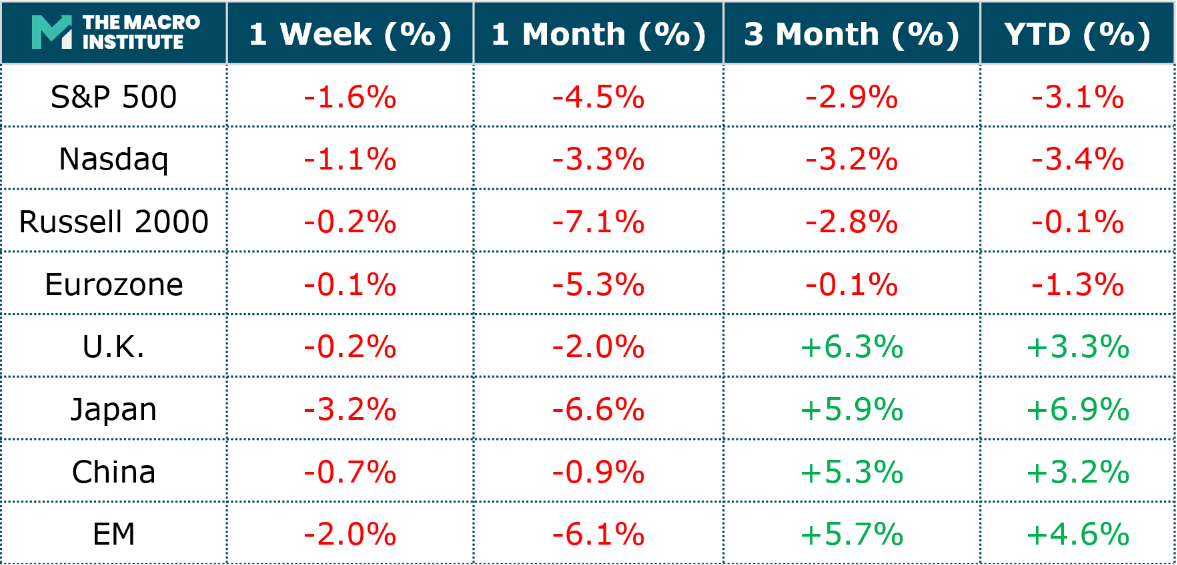
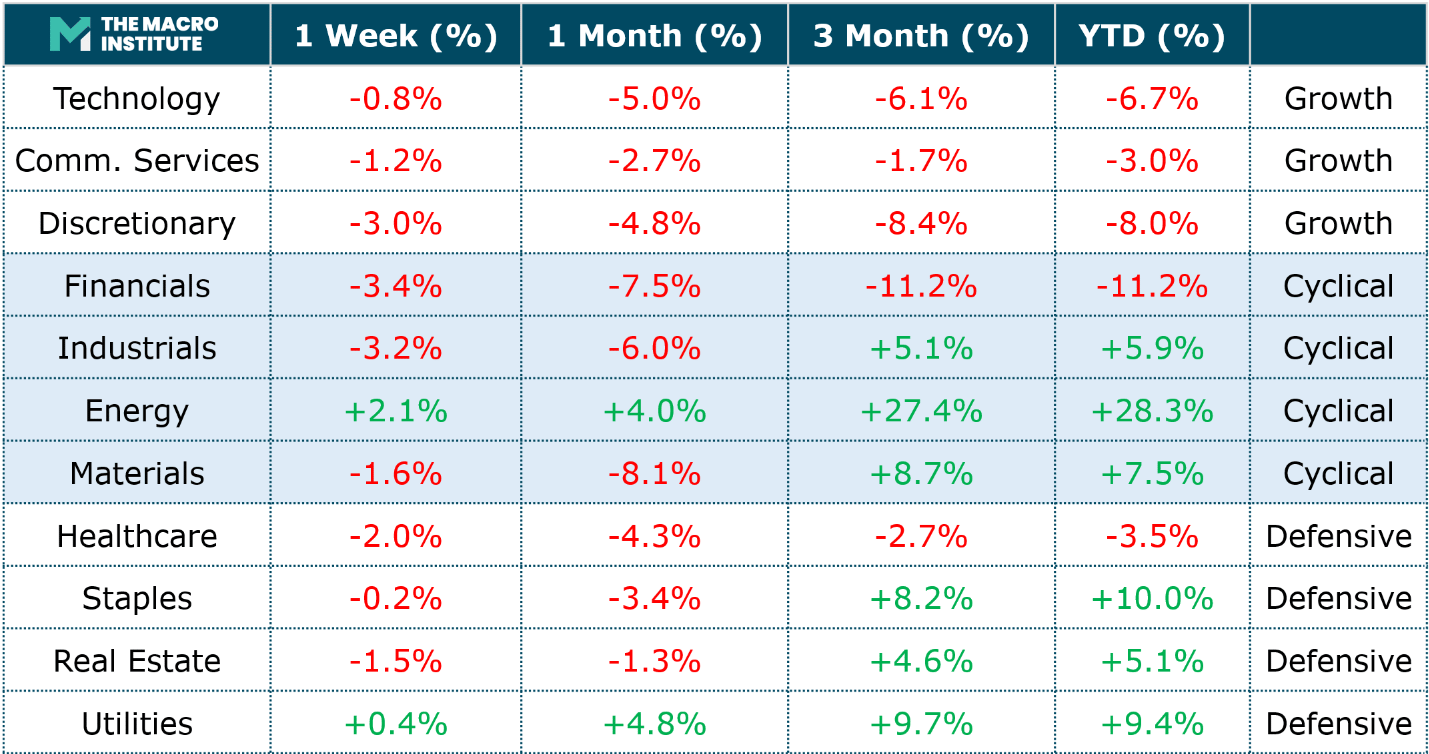
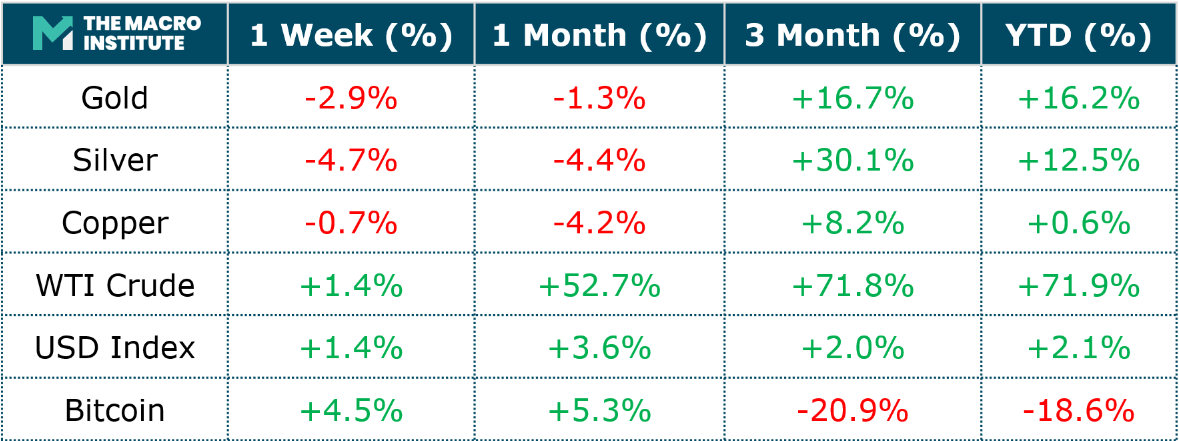
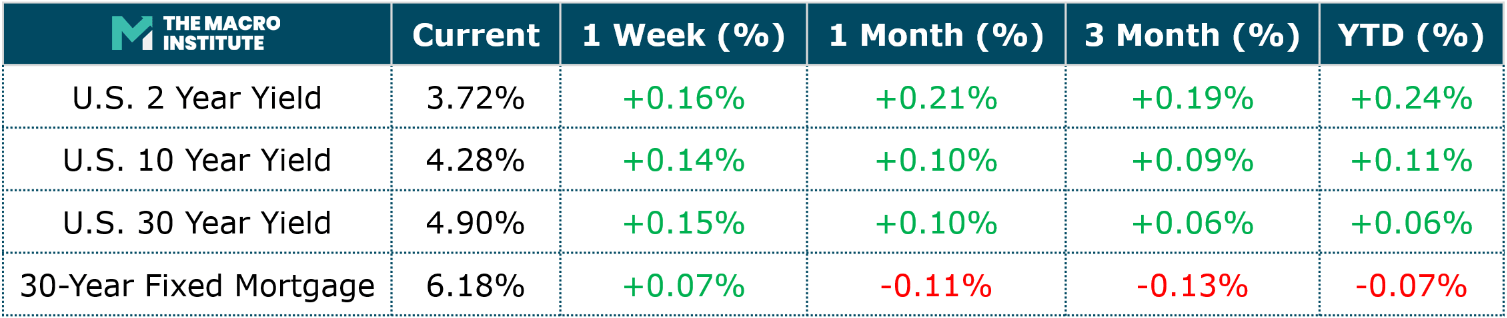
When it all clicks.

Why does business news feel like it’s written for people who already get it?
Morning Brew changes that.
It’s a free newsletter that breaks down what’s going on in business, finance, and tech — clearly, quickly, and with enough personality to keep things interesting. The result? You don’t just skim headlines. You actually understand what’s going on.
Try it yourself and join over 4 million professionals reading daily.
The Macro Week Ahead
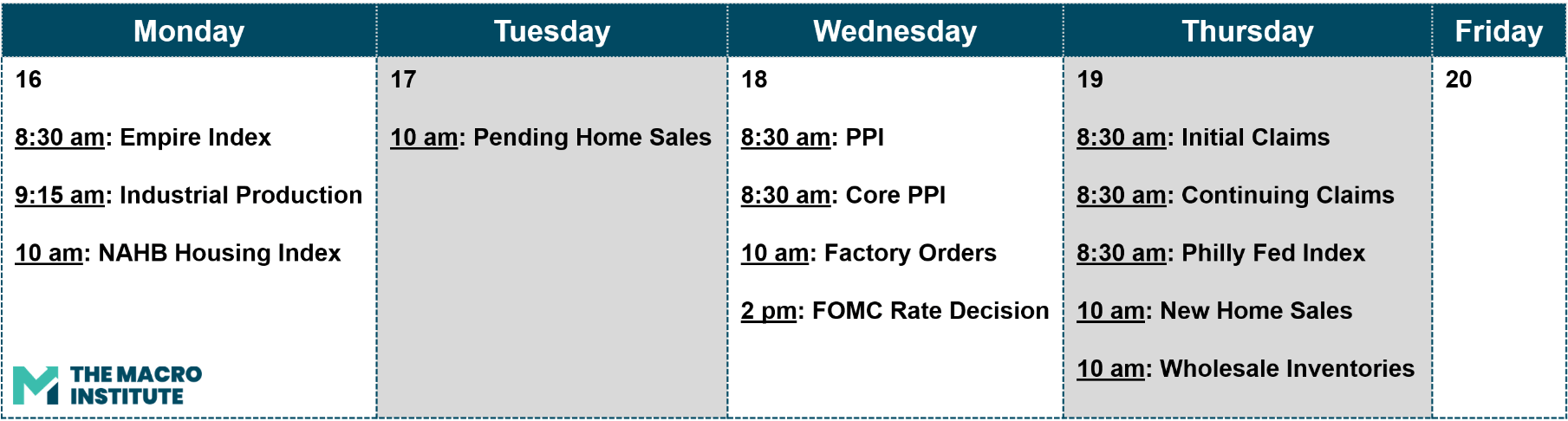
📆 Last Week’s Data Key Takeaways
🔹 CPI Held Steady While PCE Ticked Higher: February CPI rose +0.3% M/M and +2.4% Y/Y, both in line with forecasts and unchanged from January. Core CPI rose +0.2% M/M and +2.5% Y/Y, which also matched expectations. January PCE rose +0.3% M/M and +2.8% Y/Y, while Core PCE rose +0.4% M/M and +3.1% Y/Y. This was an acceleration from December's +3.0%.
🔹 NFIB Small Business Optimism Slipped: The index fell to 98.8 in February (vs 99.7 forecast), which is still slightly above the 52-year average of 98. The uncertainty index declined three points to 88, while actual sales and earnings improved. Sales hit its highest level since May 2022. Labor quality as a top concern among small businesses dropped to 15%, the lowest since April 2020.
🔹 Michigan Sentiment Fell While Inflation Expectations Held: Preliminary March Michigan Sentiment dropped to 55.0 (vs 56.6 forecast), down from 56.6 in February's final reading. One-year inflation expectations held at 3.4%, with long-run expectations at 3.3%. Sentiment surged among consumers with large stock portfolios, but stagnated or declined for those without equity exposure.
🔹 Existing Home Sales Slid, Starts Surged, Permits Fell: Existing home sales dropped to 3.91M annualized, down -8.4% from December and -4.4% Y/Y. Housing starts surged to 1.487M (vs 1.348M forecast), up +7.2% from December. Building permits fell to 1.376M, down -5.4% from December and -5.8% Y/Y.
🔹 JOLTS Job Openings Firmer Than Expected: January JOLTS came in at 6.7M openings (vs 6.54M forecast), a modest pickup that suggests labor demand hasn't cracked despite the -92K payrolls print in February.
Macro Job Board
Analyst will engage in detailed, technical discussions with traders and researchers by providing macro updates and quantitative analyses, presenting their logic and reasoning grounded in data, numbers, probabilities, and statistical insights, and addressing any follow-up questions with clarity and precision.
Working closely with the chief LatAm economist, the analyst will: analyze and interpret high-frequency economic data releases, develop and maintain databases, forecasting models, and proprietary economic indicators, and build quantitative tools to forecast economic growth, inflation, and interest rates.
This role will work closely with the Senior Portfolio Manager to develop systematic macro strategies, focusing on alpha research, including idea generation, statistical analysis, back testing, and implementation. Must independently explore and develop new ideas while collaborating in a team-oriented environment.
What We Read This Weekend
⛽ The Curse Of Middle-Sized Wars
🏦 Why Bank Stocks Are Getting Beaten Up Over Private Credit
📉 War Cost Sinks Long-Term Government Bonds